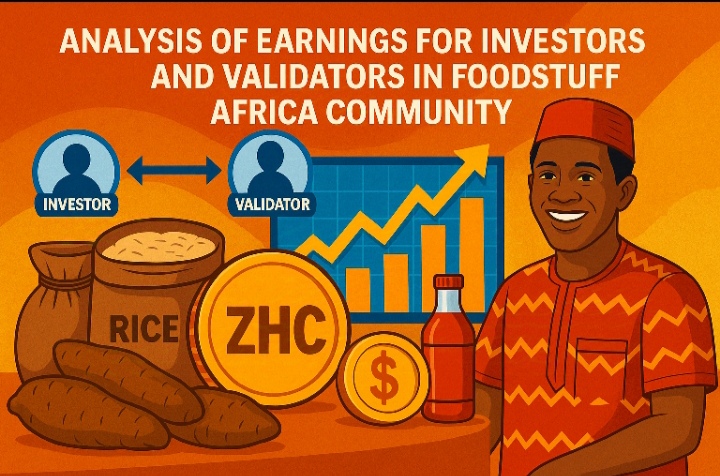
The Foodstuff Africa Community has created a sustainable ecosystem where food and finance meet—offering powerful income opportunities for both Investors and Validators. Powered by Zero Hunger Coin (ZHC), the community operates as a closed economic system where earnings are generated through actual foodstuff activities like farming and distribution. If you’re looking for ways to grow your money while supporting real businesses, this article breaks down how you can earn consistently—whether you’re investing in farmers or helping others join the system.
Who Is an Investor in Foodstuff Africa Community?
An Investor is someone who contributes money to fund real foodstuff businesses—like palm oil production, yam farming, rice distribution, and more—within the Foodstuff Africa ecosystem. This investment is made by choosing a Farmer Fund on the platform.
After funding a Farmer Fund, the investor begins to earn Zero Hunger Coin (ZHC) daily. These earnings are automatically tied to how well the food business performs. For example, as food is sold and profit is made, more ZHC is issued to the investor. These daily earnings can be claimed directly from the platform using the Foodstuff Africa dashboard.
Over time, the investor’s total returns increase in value. This is what makes the investment attractive—it appreciates like good farmland during harvest season. You’re not just waiting for one big payday; you’re receiving daily income in a coin (ZHC) that holds growing utility and value in the ecosystem.
Who Is a Validator in Foodstuff Africa Community?
A Validator plays a vital role in expanding and supporting the Foodstuff Africa Community. Validators help new investors get started by generating official account numbers for them. This ensures that only trusted and verified people join the ecosystem, which protects everyone’s investment.
Although Validators do not automatically earn free ZHC anymore for creating accounts, they still have earning power through two main channels:
- Registration Fees
Validators can charge a small fee for helping new investors set up their account. Some may add a little commission for their time, especially when they help with training, education, and ongoing support. - ZHC Trade Profits
Validators have the right to buy and sell ZHC. For example:- An old investor may want to sell their ZHC to take profits.
- A new investor may want to buy ZHC to use for buying foodstuffs or reinvesting.
In both cases, Validators can act as local exchangers. They buy ZHC at one price and sell at another—earning the margin in between. It’s like being a foodstuff agent and a digital money changer at the same time.
How Investors Make Money
Let’s walk through a simple example of how an investor earns in this system:
- You fund the PalmOil Fund with $100.
- The farmer uses the money to produce and sell palm oil.
- As sales are made, you begin to receive daily ZHC earnings.
- You can choose to:
- Hold the ZHC and let it grow.
- Sell your ZHC to others (like Validators or new investors) for fiat (USD).
- Use your ZHC to buy real foodstuff like rice, yam, palm oil, and beans inside the ecosystem.
This is not a one-time profit game—it is continuous. The longer you stay invested, the more consistent your daily ZHC becomes. Your investment appreciates over time, and you can choose to exit by selling your investment (if you no longer want to earn ZHC) and withdraw your money in Dollars.
How Validators Make Money
A Validator does more than just open accounts—they manage ZHC liquidity in their area and support investor activities.
Here’s how Validators earn:
- Initial Setup Fee: Every time they onboard a new investor, they can charge a setup or support fee.
- ZHC Buying & Selling: Validators buy ZHC from investors who want to sell and sell to investors who want to buy. Since the price of ZHC can increase with community demand, smart Validators can earn consistently from price margins.
- Using ZHC for Foodstuff: Validators also get the same access as investors to use their ZHC to buy real foodstuff. This helps them reduce their living expenses or even run foodstuff businesses in the ecosystem.
Validators can build entire micro-businesses around their Validator role—training new investors, offering support, and becoming ZHC brokers.
ZHC’s Real Utility: The Ecosystem Advantage
What makes this system unique is that ZHC is not just a token—it is a medium of exchange for foodstuff within the Foodstuff Africa Community.
If you earn ZHC, you can:
- Buy real foodstuff with it
- Reinvest it into more Farmer Funds
- Sell it to others for dollars
- Hold it for future value
Unlike other cryptocurrencies that may not have clear use, ZHC is connected to real foodstuff sales. As more food is sold by farmers and distributors, the economy inside the ecosystem grows. This means more ZHC moves around, and value increases for those who already hold it.
A Win-Win for All Participants
In the Foodstuff Africa Community:
- Investors gain daily income and long-term value from real food sales.
- Validators earn from onboarding, exchange, and strategic trades.
- Farmers and Distributors get funding to grow and sell food.
- The Community stays closed and secure, ensuring value stays inside.
- This is a decentralized economy where the more you participate, the more you benefit. Whether you’re investing in palm oil or exchanging ZHC with someone else, you’re part of a living, breathing financial ecosystem powered by real food.
In Summary,
Foodstuff Africa is not just a project—it’s a lifestyle and economic movement. It’s where you eat and earn, where digital assets meet real meals, and where every bag of rice or tuber of yam fuels a smarter financial future.
If you’re looking for a way to earn money daily, participate in real agriculture, and be part of a community-first economy, becoming an Investor or Validator in the Foodstuff Africa Community could be the best decision you ever make.